Astronomy and Innovation


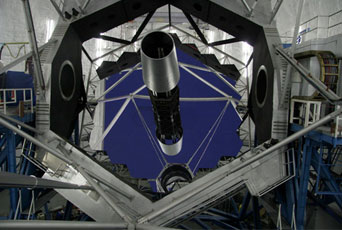
For nearly 40 years, the astronomy industry in Hawaii has been a pioneer in scientific innovation, investing over one billion dollars in capital infrastructure on the summit of Mauna Kea in 13 distinct astronomical facilities, employing roughly 600 people, and contributing over $ 150 million dollars annually to the Island’s economy. W. M. Keck Observatory accounts for approximately $ 26 million dollars annually with a staff of 138 employees, two-thirds of whom are from Hawaii. Keck I and Keck II are the most powerful telescopes in the world. The fact that W. M. Keck Observatory is here in Hawaii has greatly increased the visibility of our island throughout the world science community.

Now, there is a phenomenal prospect of the largest ground based telescope ever to be built, the Thirty Meter Telescope (TMT) considering sites here and in Chile. To see the progress of this exciting new scientific breakthrough in design and engineering go to TMT.org

Since 1968, there has been an escalating interest in the development of science and technology research throughout the State. Referred to as “Planet Hawaii” by Dr. Peter Vitousek of Stanford University, Hawaii Island continues to attract worldwide scientific interest. Encompassing over 4,000 square miles, Hawaii Island has the greatest concentration of life-zones anywhere on the planet, with 13 out of the 16 known life-zones. Hawaii’s diverse ecosystems provide unparalleled opportunities for discovery in a myriad of scientific fields.

To take advantage of the unique qualities Hawaii has to offer, innovation industries are establishing a greater presence throughout the State. Current research focuses in the life sciences, blended medicine and furthering cancer research, aerospace, and environmental sciences with an emphasis on “zero waste” models and initiatives. Hawaii also hosts research in agriculture and alternative energy projects, with the ultimate goal of securing greater food and fuel self-sufficiency. With over 10,000 species of flora and fauna found nowhere else on Earth, Hawaii Island has attracted a burgeoning ethnopharmaceuticals industry, which is becoming a major player in the local economy. Innovation industry clusters are sprouting up in different parts of the State, attracting scientists and businesses from around the world.

As a result of the oil crisis in 1973 the Natural Energy Laboratory of Hawaii (NELHA) was established in the mid 70’s and charged with developing an Ocean Thermal Energy Conversion (OTEC) project at Keahole Point on the Island of Hawaii.

When fossil fuel costs dropped to $15 a barrel in the 1980’s, the OTEC project, although a proven technology, was no longer viable. Yet, the deep sea water pipeline that had been laid for OTEC remained, creating new opportunities for innovation. Industries that emerged at the NELHA facility included aquaculture, nutroceuticals, and bottled desalinated sea water, which is currently Hawaii Island’s largest export. With oil prices heading toward a $100 per barrel, the Island needs to develop more efficient alternative and renewable energy sources, and technologies such as OTEC are being investigated with renewed vigor.

Impressive new science and technology facilities have come to Hawaii Island within the past twelve months. The Pacific Basin Agricultural Research Center in Hilo is in its first phase of operation, and construction of Phase II will make this the largest research center for biotechnology in the Pacific region. The new College of Pharmacy enrolled its first cohort of students at UH Hilo this fall, with a wait list for fall 2008.

Imiloa Astronomy Education Center, a $28 million facility in Hilo funded by NASA, opened its doors in 2005. Imiloa provides state-of-the-art education programs and facilities, including a planetarium, designed help to build bridges between our understanding of ancient methods of navigation and modern astronomy.

Palamanui, a new development by Charles Schwab, Hunt Development Group, and Island-based contractor Guy Lam, broke ground on August 24, 2007. Along with its homes, hotel and commercial ventures, Palamanui brings critical infrastructure for the relocation of the University of Hawaii’s West Hawaii Center from its current inadequate rental space in Kealakekua. This is the first of many steps toward a future four-year university in West Hawaii. It is also a wonderful demonstration of how the private sector can work together with the public sector to create much-needed access to higher learning for the residents of this island. Private sector contributions to this project include intellectual capital and social capital, as well as financial capital.

The positive long-term effects of continued growth in the Innovation Sector are the creation of a more skilled workforce and higher paying jobs. New jobs in the Innovation Sector will help to improve the quality of life in Hawaii and stabilize what has otherwise been an over-dependency on tourism to sustain our Island economy. The need to implement a rigorous STEM (science, technology, engineering, and mathematics) curriculum throughout the education pipeline and to provide a varied engineering curriculum at the University of Hawaii is imperative. To ensure a readily available, educated, and qualified workforce for all industries is one of Hawaii’s top priorities.

The three main economic drivers within the State of Hawaii are Tourism, Military, and the Innovation Sector. In 2005 the Innovation Sector employed only 5% of the workforce; however, it accounted for 17% of the three sectors total contribution toward the Gross State Product. (Source Enterprise Honolulu 2005 Annual Report).

Imagine… if the State can grow the Innovation Sector from 5% to 10% of the total workforce, what that would look like in terms of offering better than living-wage jobs and a more stable economy…..

Mahalo a nui loa

Jacqui Hoover
Executive Director - Hawaii Island Economic Development Board

More Focal Points at HIEDB